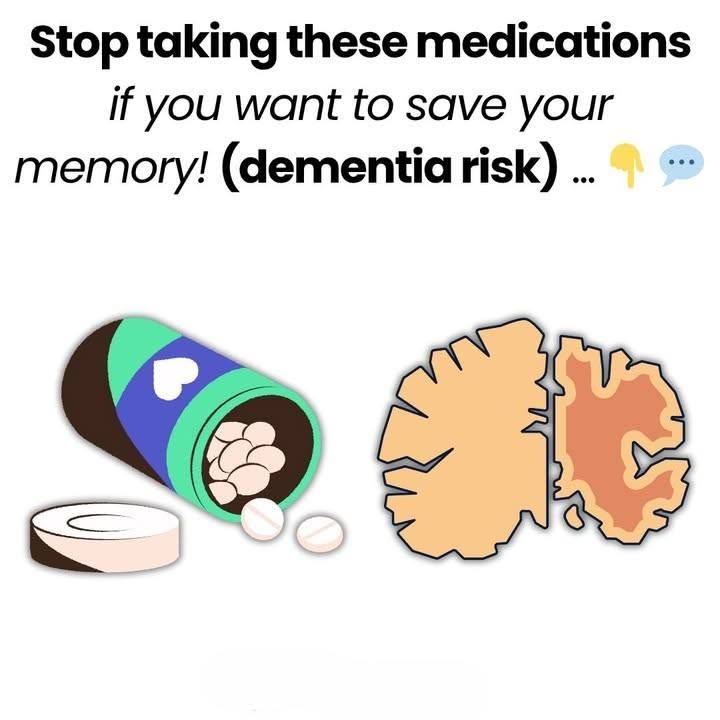
Some medications have been associated with an increased risk of cognitive decline or dementia in some studies, especially with long-term use, higher doses, or use in older adults. This does not mean these drugs always cause dementia—many are important and beneficial when appropriately prescribed. The relationship is often linked to effects such as reduced acetylcholine activity, sedation, falls, or changes in brain function.
The main medication groups of concern include:
1. Strong anticholinergic drugs (largest concern)
These block acetylcholine, a brain chemical important for memory and learning.
Examples:
- Older antihistamines
- Diphenhydramine (often in sleep aids)
- Chlorpheniramine
- Some bladder-control medicines
- Oxybutynin
- Some antidepressants
- Amitriptyline
- Paroxetine
- Some anti-nausea or motion-sickness medicines
- Meclizine
2. Benzodiazepines (especially long-term use)
Used for anxiety, insomnia, and seizures.
Examples:
- Diazepam
- Lorazepam
- Alprazolam
Long-term use in older adults has been linked in some studies to increased dementia risk, though researchers continue to debate how much is due to the medication versus underlying conditions.
3. Certain sleep medications
Especially older sedative-hypnotics.
Examples:
- Zolpidem
- Older barbiturates
4. Opioid pain medicines (with chronic use)
Long-term opioid exposure may be associated with cognitive problems, particularly through sedation, reduced activity, falls, and other effects.
Examples:
- Morphine
- Oxycodone
5. Some antipsychotic medications
These can affect cognition, especially in older adults with dementia.
Examples:
- Haloperidol
- Quetiapine
6. Certain medications with sedating effects
Drugs that slow brain activity can contribute to confusion or cognitive impairment, especially when combined.
Examples:
- Some muscle relaxants
- Some anti-seizure medications
- Some medications used for nerve pain
Practical points
- Do not stop prescribed medicines suddenly, especially benzodiazepines, antidepressants, seizure medicines, or psychiatric medicines.
- The risk is usually about long-term exposure and cumulative medication burden, not a single dose.
- Older adults are more vulnerable because the brain and kidneys process medications differently with age.
If you want, I can also provide a “top 20 dementia-risk medications to review with your doctor” list or a safer alternatives list for sleep, allergies, anxiety, and bladder problems.