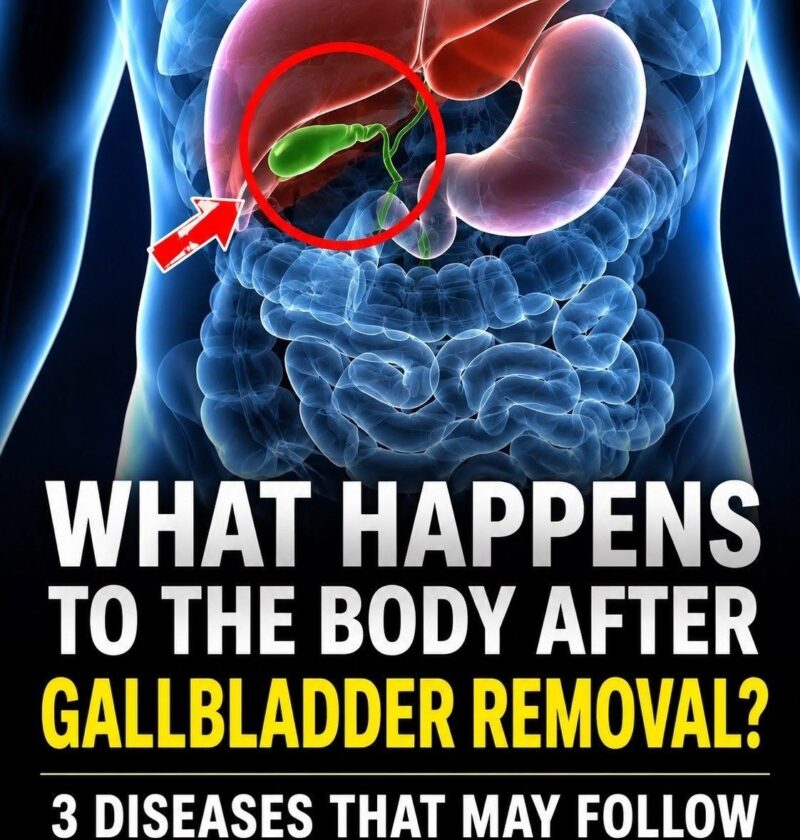
The claim “avoid surgery if possible” is a bit misleading when it comes to gallbladder disease. In many cases, removal of the gallbladder (cholecystectomy) is not optional—it’s the standard and safest treatment when gallstones or inflammation are causing symptoms or complications.
Here’s what actually happens to the body after gallbladder removal, and what issues can sometimes follow.
What the gallbladder does (before surgery)
The gallbladder stores and concentrates bile, a digestive fluid made by the liver. When you eat fatty food, it releases bile into the small intestine to help digest fats.
What changes after removal
After surgery:
- Bile no longer gets stored
- It flows continuously from the liver into the intestine
- Digestion still works, but is less “timed” for fat meals
Most people adapt completely within weeks to months and live normal lives without restrictions.
3 possible conditions or issues after gallbladder removal
1) Postcholecystectomy Syndrome
This is a broad term, not a single disease.
It includes symptoms like:
- Abdominal pain
- Bloating
- Indigestion
- Nausea
It may be due to:
- Residual bile duct stones
- Digestive sensitivity
- Other gastrointestinal conditions unrelated to the gallbladder
Most cases are treatable once the cause is identified.
2) Bile Acid Diarrhea
Because bile flows continuously into the intestines:
- Some people get frequent loose stools
- Especially after fatty meals
This is usually mild and improves with:
- Diet adjustment (less fatty food initially)
- Medications that bind bile acids if needed
3) Sphincter of Oddi Dysfunction (rare)
The sphincter controlling bile flow can become overly tight or spasm:
- Causes upper abdominal pain similar to gallbladder attacks
- Can affect digestion
It’s uncommon and often investigated only if symptoms persist.
Important reality check: Is surgery avoidable?
In some mild or silent gallstones, doctors may monitor without surgery. But when there are:
- Repeated gallbladder attacks
- Infection (cholecystitis)
- Blocked bile ducts
- Pancreatitis risk
…then avoiding surgery can actually be dangerous.
Untreated gallbladder disease can lead to:
- Severe infection
- Pancreatitis (potentially serious)
- Bile duct obstruction
Bottom line
- Most people do very well after gallbladder removal
- A small number develop manageable digestive changes
- Surgery is usually recommended when the gallbladder is already causing harm
If you want, tell me your symptoms or diagnosis and I can explain whether surgery is typically recommended in that specific situation.