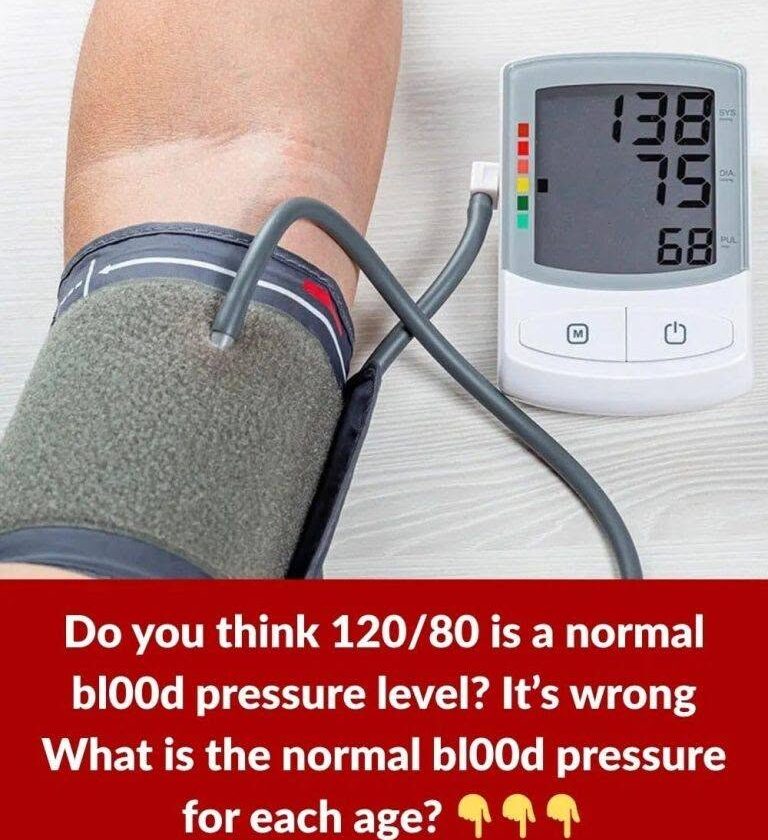
Blood pressure doesn’t have a different “normal” for every exact age in adults. Instead, medical guidelines define a general healthy range, with some differences for children and older adults.
Here’s a clear breakdown.
Adults (18+ years)
Normal blood pressure
- Less than 120/80 mmHg
Elevated
- 120–129 / less than 80
High blood pressure (Hypertension)
- Stage 1: 130–139 / 80–89
- Stage 2: 140+/90+
These cutoffs apply across most adult ages (18 to 60+), including seniors.
Older adults (65+)
There is no separate “official normal,” but:
- Many doctors aim for under 130–140 systolic depending on overall health
- Targets may be relaxed in frail patients to avoid dizziness or falls
So for many older adults:
- Around <130–140 / <80–90 may be considered acceptable depending on individual risk
Children & teens (approximate ranges)
Blood pressure in kids depends on age, height, and sex, but general estimates:
- Newborns: ~60–90 / 20–60
- Infants (1–12 months): ~80–100 / 50–65
- Toddlers (1–5 years): ~90–105 / 55–70
- School age (6–12 years): ~95–110 / 60–75
- Teenagers: gradually approaches adult levels (~110–125 / 65–80)
Doctors use percentile charts rather than fixed numbers in children.
Key takeaway
- Adult “normal” = below 120/80 mmHg
- Children vary by age and size
- Older adults may have slightly higher acceptable targets depending on health
When blood pressure is concerning
- Consistently ≥130/80 → should be monitored
- ≥140/90 → likely hypertension
- <90/60 with symptoms → possible low blood pressure issue
If you want, I can also explain:
- how to correctly measure blood pressure at home
- or what causes sudden spikes or drops during the day