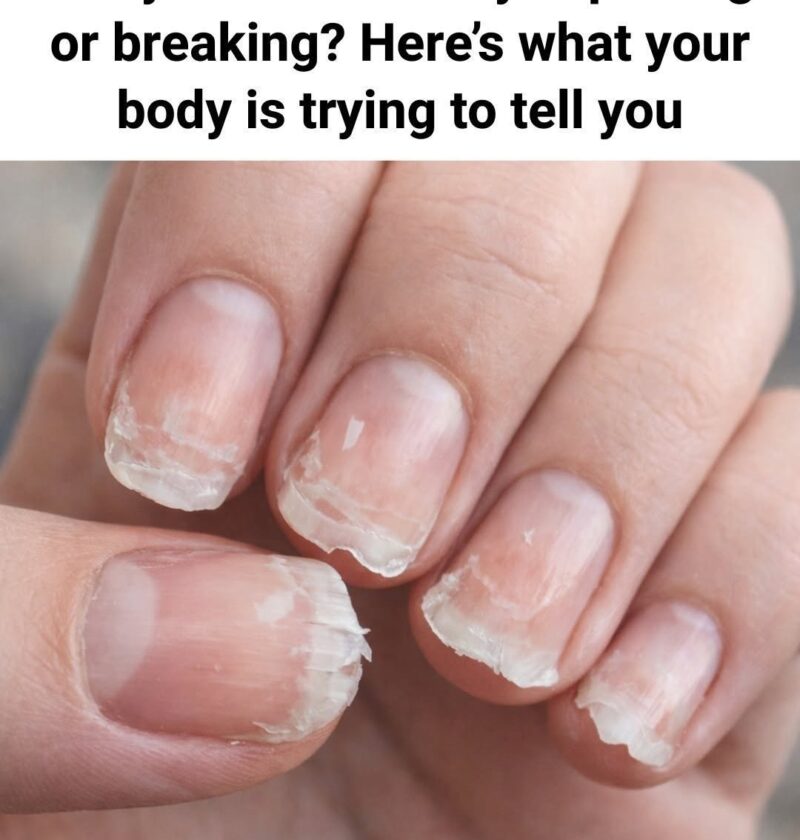
Weak or brittle nails can sometimes provide clues about health, but they’re not a reliable diagnostic tool by themselves. Most often, brittle nails are caused by everyday factors rather than a serious disease.
Common causes of weak or brittle nails
💧 Frequent exposure to water and chemicals
Repeated wetting and drying of the nails can make them fragile. Common culprits include:
- Frequent handwashing
- Dishwashing
- Cleaning products
- Nail polish removers (especially those containing acetone)
🥗 Nutritional factors
In some cases, brittle nails may be associated with:
- Low iron levels
- Inadequate protein intake
- Certain vitamin or mineral deficiencies
However, supplements are not always the answer unless a deficiency is confirmed.
🩺 Medical conditions
Sometimes nail changes can be linked to underlying conditions such as:
- Iron Deficiency Anemia
- Hypothyroidism
- Certain skin conditions like Psoriasis or eczema
👵 Aging
Nails often become drier and more brittle with age.
Nail changes that may deserve attention
Consider seeing a healthcare professional if you notice:
- Sudden or severe nail changes
- Nail separation from the nail bed
- Significant discoloration (especially dark streaks)
- Pitting, thickening, or deformity
- Symptoms such as fatigue, weight changes, hair loss, or shortness of breath occurring alongside nail changes
What can help
- Wear gloves for cleaning and prolonged water exposure.
- Use moisturizers on hands and cuticles regularly.
- Avoid excessive use of harsh nail products.
- Eat a balanced diet with adequate protein and iron.
- Keep nails trimmed if they’re prone to splitting.
Bottom line
Weak or brittle nails can sometimes reflect issues like iron deficiency or thyroid problems, but more often they’re related to moisture, chemicals, aging, or everyday wear and tear. The pattern of nail changes and any accompanying symptoms are usually more informative than brittle nails alone.