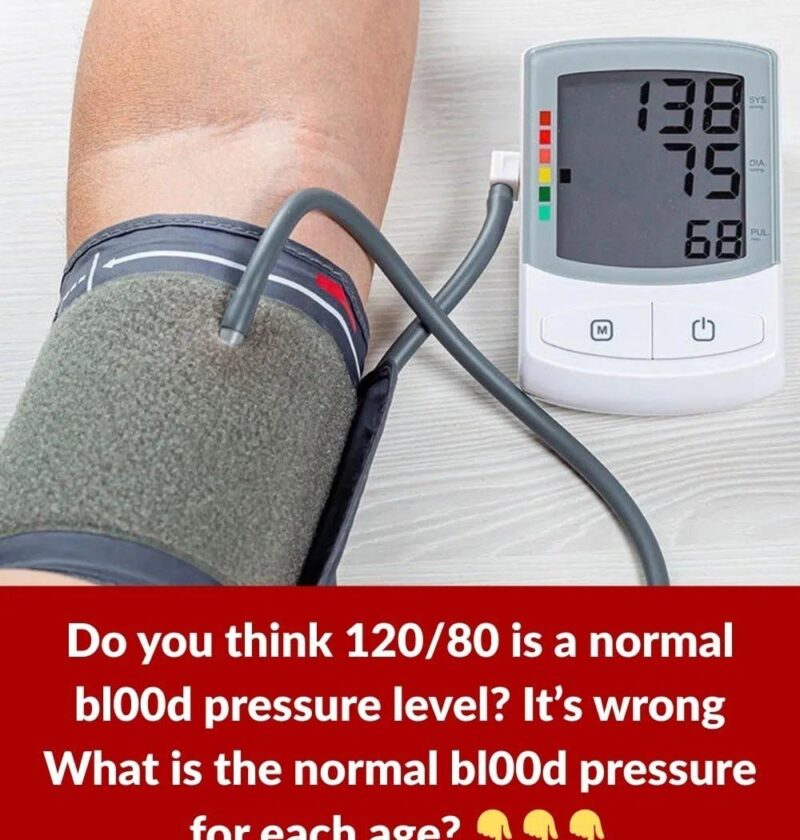
🩺 What Is Normal Blood Pressure at Each Age?
One common mistake is assuming that older adults are supposed to have high blood pressure. In adults, age alone doesn’t make a reading such as 150/90 “normal.”
Adults
| Age | Normal blood pressure |
|---|---|
| 18–39 | Below 120/80 mmHg |
| 40–59 | Below 120/80 mmHg |
| 60–79 | Below 120/80 mmHg |
| 80+ | Below 120/80 mmHg can still be normal, although treatment targets may be individualized |
Current U.S. guidelines classify adult blood pressure as normal when systolic pressure is below 120 and diastolic pressure is below 80 mmHg. (professional.heart.org)
📊 Know the numbers
- Normal: <120 / <80
- Elevated: 120–129 / <80
- Stage 1 hypertension: 130–139 or 80–89
- Stage 2 hypertension: ≥140 or ≥90 (professional.heart.org)
For children younger than 13, blood pressure isn’t interpreted using these adult cutoffs. Doctors consider the child’s age, sex, and height when determining whether a reading is abnormal. (nhlbi.nih.gov)
⚠️ One reading isn’t the whole story
Blood pressure can temporarily rise because of stress, exercise, caffeine, pain, illness, or an incorrect measurement technique. A diagnosis of hypertension generally requires properly measured readings on more than one occasion.
If a reading is over 180/120 mmHg, repeat it after a short rest. If it remains that high, contact a healthcare professional promptly. If it’s accompanied by chest pain, difficulty breathing, weakness, numbness, vision changes, or trouble speaking, seek emergency medical care. (heart.org)
Bottom line: Don’t use age as an excuse for persistently high blood pressure. For most adults, under 120/80 mmHg is the normal range, while individual treatment goals may differ based on overall health.