How to Get Rid of Milia
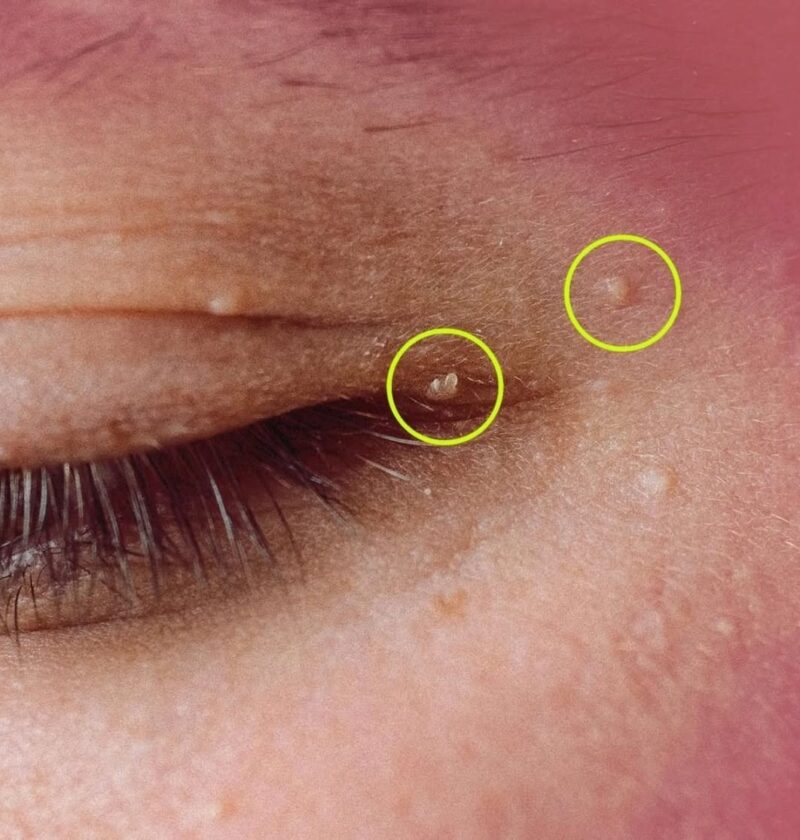
First, a clarification: milia aren’t “fat cysts.” They’re tiny, firm, white or yellowish cysts filled with keratin (a protein found in skin), commonly appearing around the eyes, cheeks, or nose.
What you can do
Don’t squeeze, pierce, or cut them yourself. The skin around the eyes is particularly delicate, and attempting removal can cause infection, scarring, or skin damage.
Use gentle skincare. Avoid heavy, irritating products around the affected area and don’t scrub aggressively.
A dermatologist can remove them safely. Depending on the type and location, professional extraction or other treatments may be used.
Retinoid creams may sometimes help prevent or treat milia, but they aren’t appropriate for everyone—especially around the eyes—so ask a dermatologist before using one.
If you develop milia repeatedly, a dermatologist can look for contributing factors and recommend an appropriate routine.
Be careful with DIY “milia removers”
Avoid lemon juice, baking soda, vinegar, needles, or strong acids. Irritating the skin can leave dark marks or scars, particularly in darker skin tones.
Also, not every tiny white bump is milia. If a bump is growing, painful, bleeding, changing, or doesn’t look like typical milia, have it examined rather than trying to remove it yourself. Dermatologists are trained to distinguish harmless bumps from other skin conditions.
A
American Academy of Dermatology
+1
Bottom line: Milia are usually harmless and cosmetic. The safest way to get rid of persistent milia is professional removal rather than squeezing or home extraction.
A
Sources