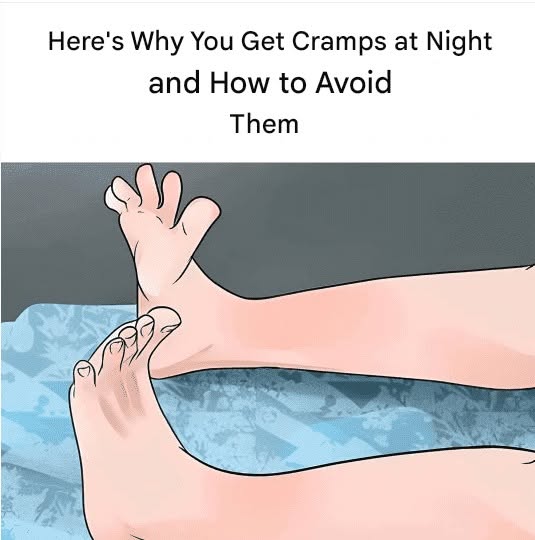
What people usually call “night cramps” are sudden, painful muscle contractions—most often in the calves or feet—known as nocturnal leg cramps.
🦵 Common real causes
⚡ 1. Muscle fatigue or overuse
- Long standing or walking during the day
- New or intense exercise
- Muscle simply “overreacting” at rest
💧 2. Dehydration and electrolyte imbalance
Low levels of minerals like:
- Potassium
- Magnesium
- Calcium
can contribute in some cases, because these help muscles contract and relax properly. But in many people, levels are still normal even with cramps.
🛌 3. Sleeping position
- Feet pointed downward (shortens calf muscles)
- Tight bedding restricting movement
This is one of the most overlooked triggers.
🧠 4. Nerve or circulation changes (more common with age)
Conditions like:
- Peripheral artery disease
- Peripheral neuropathy
can increase cramping risk, especially at night.
💊 5. Medications
Some medicines may increase cramps, such as:
- Diuretics (“water pills”)
- Certain cholesterol medications (statins)
- Some asthma or blood pressure drugs
🧠 Are mineral deficiencies the main cause?
Usually no. Magnesium or potassium deficiency can contribute, but:
- Most people with cramps have normal blood levels
- Supplements don’t reliably fix cramps unless there’s a true deficiency
🛑 When to pay attention
See a doctor if cramps are:
- Very frequent or worsening
- Accompanied by swelling, weakness, or numbness
- Affecting sleep regularly
💡 Simple things that often help
- Stretch calves before bed
- Stay hydrated during the day
- Avoid sleeping with toes pointed down
- Light walking or stretching when a cramp starts
Bottom line
Night cramps are usually caused by muscle fatigue, position, or nerve/circulation factors—not just mineral deficiency.
If you want, I can show you a 30-second stretch that actually reduces night cramps for many people.