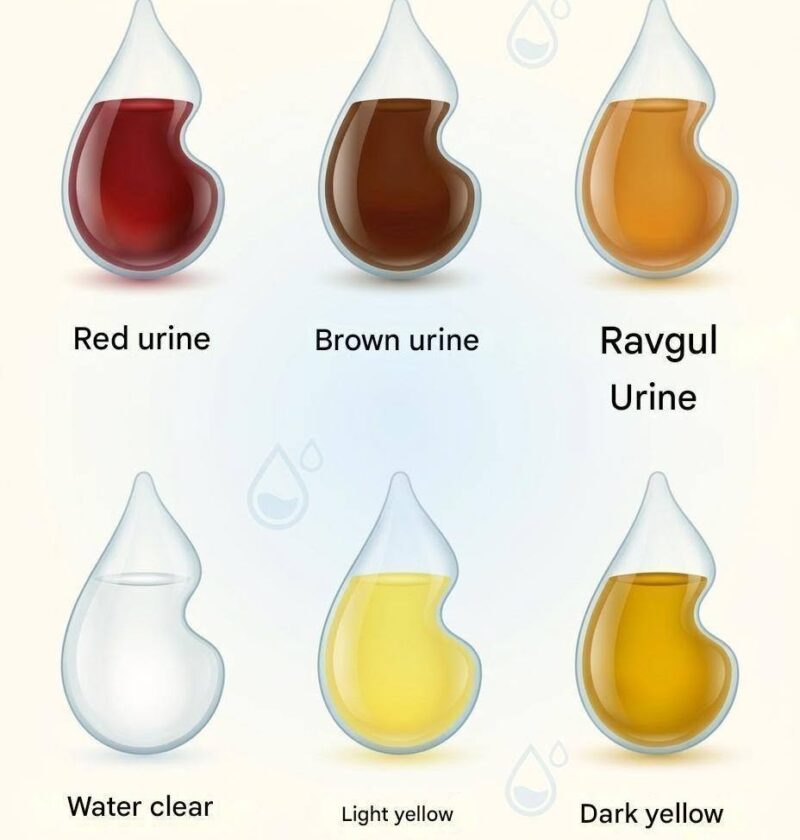
What Does the Color of Your Urine Say About Your Health?
Urine color can provide clues, especially about hydration, but it cannot diagnose a disease by itself. Normal urine ranges from nearly clear to pale or light yellow. (Cleveland Clinic)
🟡 Pale yellow
Usually a good sign. Pale yellow urine generally indicates that you’re adequately hydrated. The yellow color comes from a natural pigment called urochrome.
🟨 Dark yellow or amber
Often means your urine is more concentrated, commonly because you’re not drinking enough fluid. Dark urine can accompany other signs of dehydration such as thirst, dry mouth or dizziness.
💧 Completely clear
Occasional clear urine isn’t usually concerning, but consistently colorless urine can occur when you’re drinking a lot of water. If it’s persistently clear without excessive fluid intake, discuss it with a healthcare professional.
🟠 Orange
Orange urine can result from dehydration, certain medications or food dyes. It can also sometimes be associated with liver or bile-duct problems, particularly if it persists or occurs with other symptoms.
🩷 Pink or red
This can be caused by foods such as beets or rhubarb, but it may also represent blood in the urine. Blood can occur with urinary infections, kidney stones and other urinary-tract conditions. Persistent red or pink urine should be medically evaluated.
🟤 Brown or cola-colored
Very dark brown urine can occur with significant dehydration, but it can also be associated with liver problems or other medical conditions. If it doesn’t quickly return toward normal after adequate hydration, seek medical advice.
🟢 Green or 🔵 blue
These unusual colors are often related to medications, dyes or certain foods, although infections and rare medical conditions can also cause them. Persistent blue/green urine warrants medical evaluation.
☁️ Cloudy or foamy urine
Cloudiness can occur with dehydration, urinary infections or kidney stones. Persistent foamy/bubbly urine can sometimes indicate excess protein in the urine and should be checked, particularly if it happens repeatedly.
🚨 When to get checked
Don’t rely on color alone. Seek medical advice if urine is persistently red, deep brown, very cloudy, or repeatedly foamy, especially if you also have pain, fever, burning during urination, swelling, or changes in how much you urinate. A urinalysis can check for blood, protein, glucose, ketones and other abnormalities that aren’t visible just by looking at urine.