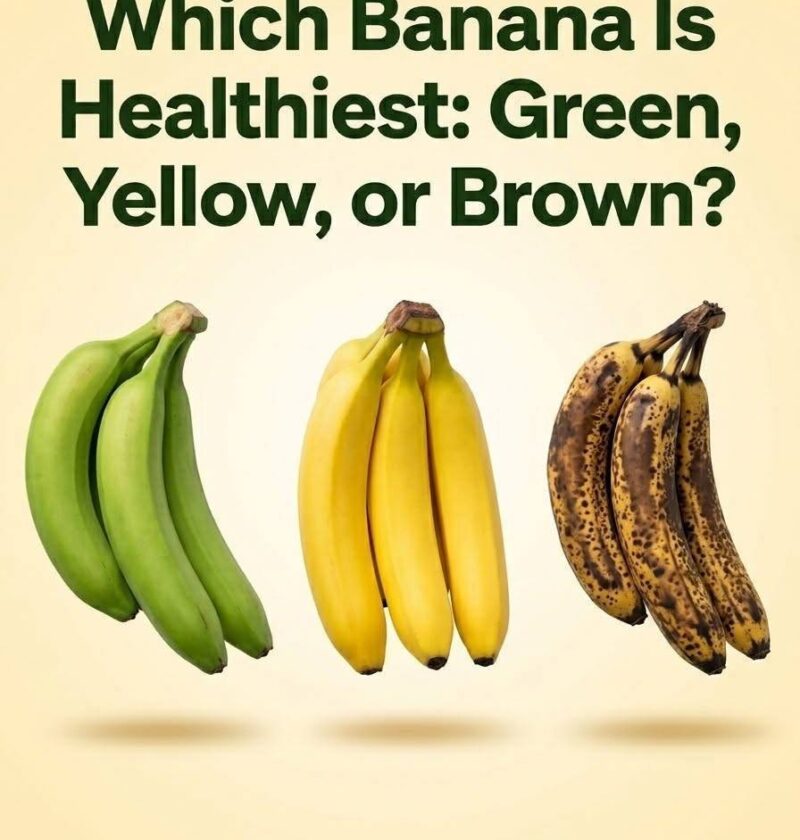
Which Banana Is Healthiest: Green, Yellow, or Brown?
The surprising answer is: there isn’t one “healthiest” banana for everyone. The nutritional differences are mainly related to how the starch changes as the banana ripens.
🟢 Green banana — best for resistant starch
Unripe bananas contain considerably more resistant starch, which isn’t digested like ordinary starch and can act somewhat like a prebiotic fiber for gut bacteria.
Green bananas also generally contain less readily available sugar than ripe bananas.
Good choice if: you’re particularly interested in resistant starch, digestive health or keeping the rise in blood glucose more moderate.
🟡 Yellow banana — best all-around choice
As a banana ripens, resistant starch is converted into simpler sugars. That makes the fruit sweeter and softer and easier to digest.
For most people, a ripe yellow banana is an excellent everyday fruit and provides nutrients such as potassium, vitamin B6 and fiber.
Good choice if: you want a convenient, naturally sweet snack.
🟤 Brown-spotted banana — sweeter, but not “bad”
Brown spots are a normal sign of advancing ripeness. Starch continues converting to sugars, so these bananas taste considerably sweeter.
They’re particularly useful for smoothies, oatmeal or banana bread, where their sweetness means you may need less added sugar.
🏆 So which should you choose?
| Banana | Main advantage |
|---|---|
| 🟢 Green | More resistant starch, less readily available sugar |
| 🟡 Yellow | Best balance of taste, nutrition and convenience |
| 🟤 Brown-spotted | Sweeter and excellent for cooking |
Bottom line: Don’t throw away a banana because it has brown spots. 🍌 All three stages can fit into a healthy diet. If you’re specifically looking for more resistant starch and less rapidly available sugar, green is the interesting choice; if you simply want a nutritious everyday fruit, yellow is an excellent choice.