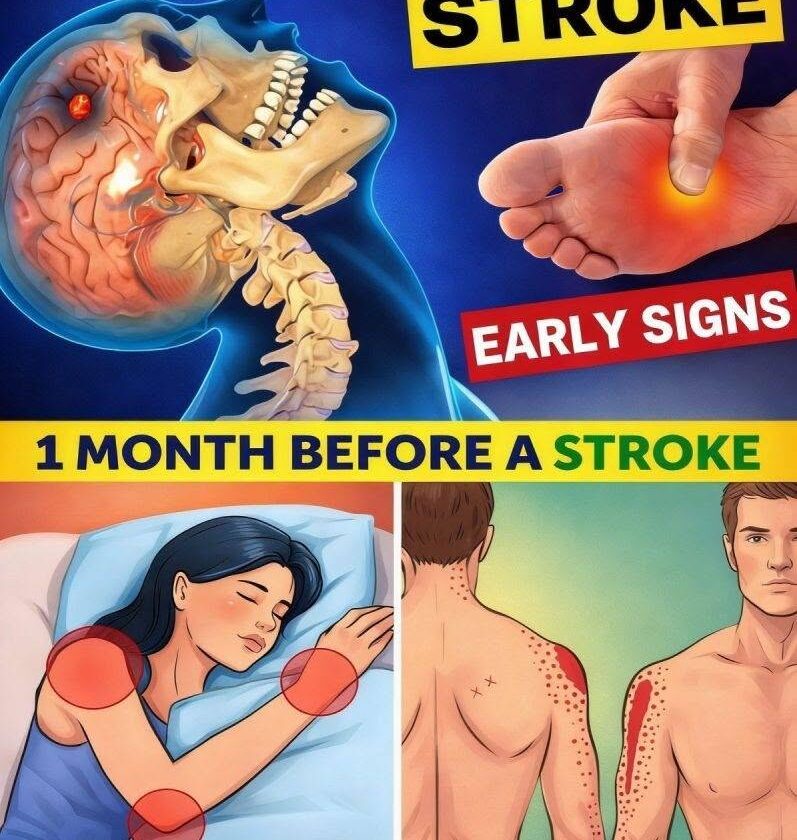
“8 Warning Signs of Stroke One Month Before” — What You Should Really Know
The “one month before” part of this headline is misleading. A stroke does not reliably announce itself a month in advance with a predictable set of symptoms.
What can happen is a transient ischemic attack (TIA)—sometimes called a “warning stroke.” It produces stroke-like symptoms that may disappear within minutes or hours. A TIA is a medical emergency, because it can signal a stroke risk in the near future.
🚨 8 symptoms you should never ignore
Sudden symptoms include:
- Face drooping or numbness, especially on one side
- Weakness or numbness in an arm or leg, particularly on one side
- Slurred speech or difficulty speaking
- Difficulty understanding what someone is saying
- Sudden vision changes in one or both eyes
- Sudden loss of balance or coordination
- Sudden dizziness or difficulty walking
- A sudden, severe headache with no known cause
Remember: B.E. F.A.S.T.
B — Balance loss
E — Eye/vision changes
F — Face drooping
A — Arm weakness
S — Speech difficulty
T — Time to call emergency services
If these symptoms occur—even if they completely disappear—don’t wait for another episode. A TIA needs urgent assessment.
🛡️ 9 practical ways to reduce stroke risk
- Control high blood pressure — one of the most important modifiable risk factors.
- Don’t smoke or use tobacco.
- Keep cholesterol under control.
- Manage diabetes and blood sugar.
- Exercise regularly and avoid prolonged inactivity.
- Maintain a healthy weight.
- Eat a heart-healthy diet, emphasizing vegetables, fruits, whole grains, legumes, fish and minimally processed foods.
- Limit alcohol or avoid it.
- Take prescribed medications consistently and discuss any side effects with your clinician rather than stopping them yourself.