What Happens to the Body After Gallbladder Removal? Understanding Possible Changes
The headline “3 diseases that may follow – avoid surgery if possible” can be misleading. Gallbladder removal (cholecystectomy) is a common and generally safe procedure when it is medically necessary. Avoiding surgery is not always the best choice, because untreated gallbladder problems can sometimes lead to serious complications.
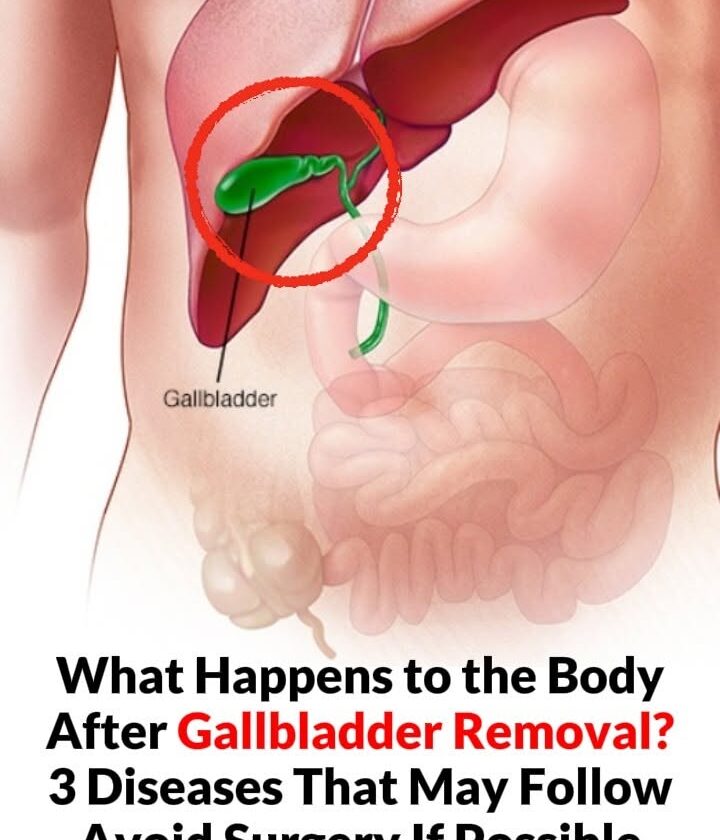
The gallbladder stores bile made by the liver and releases it during meals to help digest fats. After removal, the liver still makes bile, but it flows directly into the intestine instead of being stored.
Possible Changes After Gallbladder Removal
1. Bile acid diarrhea
- Some people develop frequent, watery stools because bile reaches the colon in larger amounts.
- This can often be managed with diet changes and medications that bind bile acids.
2. Digestive discomfort
- Some people experience:
- Bloating
- Gas
- Indigestion
- Discomfort after fatty meals
- Many people improve over time as the digestive system adapts.
3. Changes in fat digestion
- Large, high-fat meals may be harder to tolerate for some people.
- Eating smaller meals and choosing healthier fats can help.
Does gallbladder removal cause major diseases?
Research has explored possible associations with certain long-term digestive changes, but gallbladder removal itself is not considered a cause of a specific set of “three diseases” that everyone develops.
When gallbladder removal is usually recommended
Doctors often recommend surgery for problems such as:
- Repeated painful gallstone attacks
- Gallbladder inflammation (cholecystitis)
- Blocked bile ducts
- Gallstone-related pancreatitis
- Certain gallbladder growths or cancer risks
Before deciding on surgery
The right choice depends on:
- Your symptoms
- The type and severity of gallbladder disease
- Your overall health
- The risks of surgery versus the risks of leaving the condition untreated
If you are considering gallbladder surgery, it’s useful to discuss with a healthcare professional whether surgery is necessary in your case or whether monitoring and other treatments are reasonable.