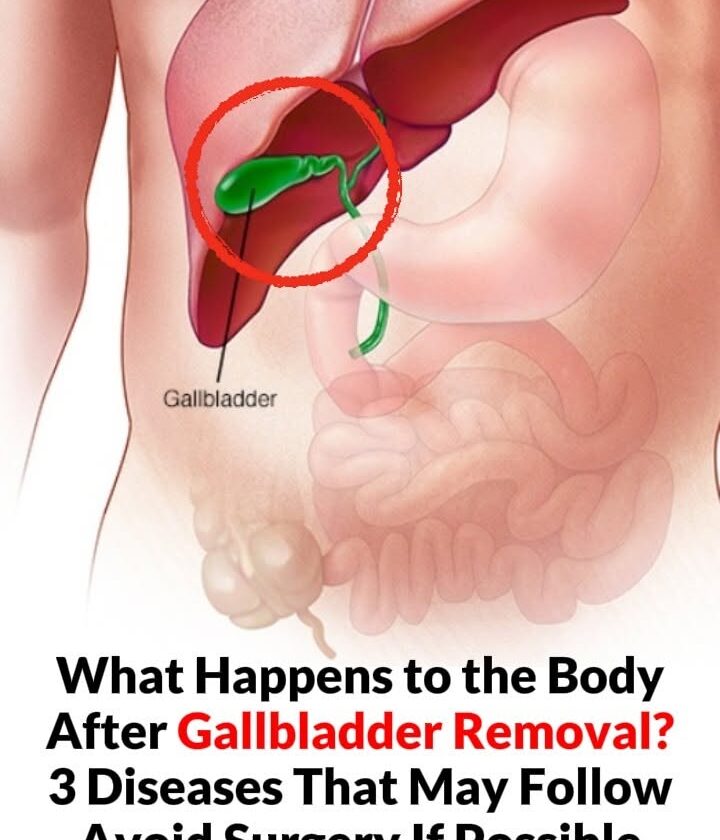
🩺 What Happens to the Body After Gallbladder Removal? 3 Problems That Can Occur
The claim that you should “avoid gallbladder surgery whenever possible” is misleading. Gallbladder removal (cholecystectomy) is a common and generally safe operation, and the gallbladder isn’t essential—you can live normally without it. When gallstones are causing repeated attacks or complications, surgery may prevent more serious problems. (NIDDK)
What changes after surgery?
Your liver continues to make bile, but instead of storing it in the gallbladder, bile flows more continuously into the intestine. Most people adapt well and can eventually eat a normal, healthy diet. (NIDDK)
3 problems that can occur
1. Diarrhea or more frequent stools
A small number of people develop softer or more frequent bowel movements because bile reaches the intestine more continuously. This is often temporary, but persistent diarrhea can sometimes require treatment. (NIDDK)
2. Indigestion or difficulty tolerating fatty foods
Some people experience bloating, nausea, abdominal discomfort or indigestion after surgery. Fatty foods may be particularly troublesome initially. These symptoms often improve as the body adjusts. (nhs.uk)
3. Persistent abdominal symptoms (“post-cholecystectomy syndrome”)
Some patients continue to have abdominal pain, indigestion or diarrhea after the operation. Importantly, this doesn’t necessarily mean the surgery caused a new disease—sometimes another digestive condition is responsible and needs investigation. (nhs.uk)
⚠️ What about serious complications?
They are uncommon, but surgery can cause infection, bleeding, bile leakage, bile-duct injury, blood clots or retained stones. Bile-duct injury is rare but can require additional treatment or surgery. (nhs.uk)
Should you avoid surgery?
Not automatically. If you have gallstones that aren’t causing symptoms, treatment may not be necessary. But symptomatic gallstones, recurrent attacks, gallbladder inflammation, bile-duct obstruction or gallstone pancreatitis can make removal the appropriate treatment. Untreated obstruction can lead to serious complications. (NIDDK)
Bottom line: Gallbladder removal doesn’t normally cause three new diseases. Most people live normally afterward. The main longer-term issues are changes in bowel habits, digestive symptoms and, in some people, persistent abdominal symptoms. Whether surgery is appropriate depends on why the gallbladder is being removed and the individual’s overall health.
If someone has severe abdominal pain lasting several hours, fever/chills, vomiting, or yellow skin/eyes, they should seek prompt medical care because these can indicate a gallstone complication. (NIDDK)