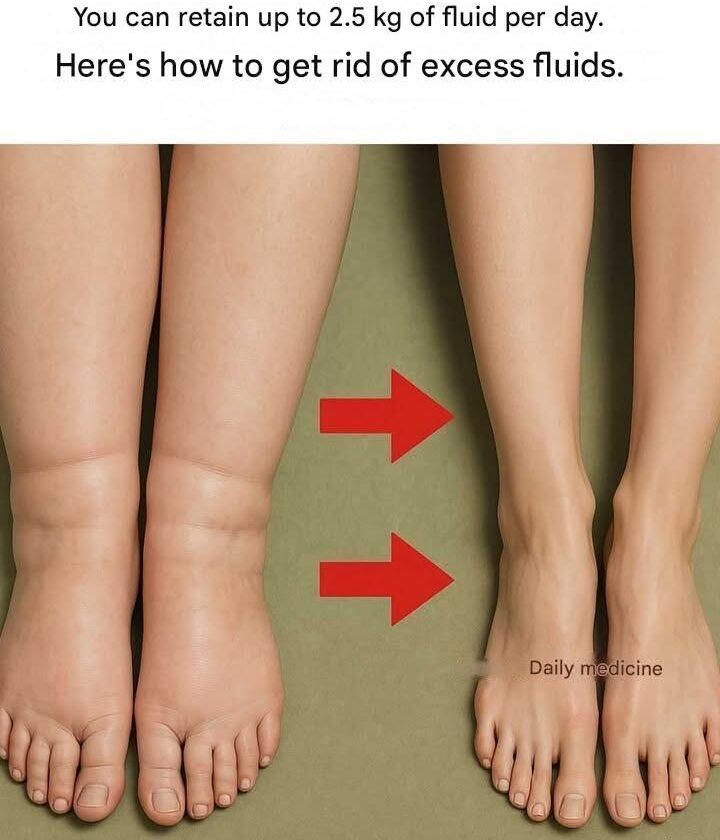
The claim “You can retain up to 2.5 kg of fluid per day” needs context. Body weight can fluctuate by several kilograms over short periods because of water balance, but this does not usually mean the body is holding harmful “excess fluid” that needs to be aggressively removed.
Why your body may hold extra water
Temporary water retention can happen because of:
- High salt intake — sodium causes the body to hold more water.
- Carbohydrate changes — stored glycogen binds water, so eating more carbs can increase scale weight.
- Hormonal changes — many people notice changes around menstrual cycles.
- Long periods of sitting or standing — fluid may collect in the legs.
- Heat, travel, stress, or poor sleep
- Certain medications or health conditions
Healthy ways to support normal fluid balance
- Drink enough water: Dehydration can actually encourage the body to conserve fluid.
- Reduce excess salt: Limit highly processed and salty foods.
- Eat potassium-rich foods: Foods such as bananas, beans, leafy greens, and potatoes can support normal fluid balance for many people.
- Move regularly: Walking and gentle exercise help circulation.
- Sleep well: Poor sleep can affect hormones involved in fluid regulation.
Be cautious with “water-loss” tricks
- Avoid extreme detoxes, fasting, or unnecessary diuretics (“water pills”) unless prescribed.
- Rapid weight drops from sweating or dehydration are not the same as losing fat.
Seek medical advice if swelling is unusual
Talk to a healthcare professional if you have:
- Sudden swelling in the legs, face, or abdomen
- Shortness of breath
- Chest pain
- Rapid unexplained weight gain
- Swelling that is persistent or worsening
A few pounds of day-to-day fluctuation can be normal, but persistent fluid retention can sometimes signal an underlying health issue that needs evaluation.