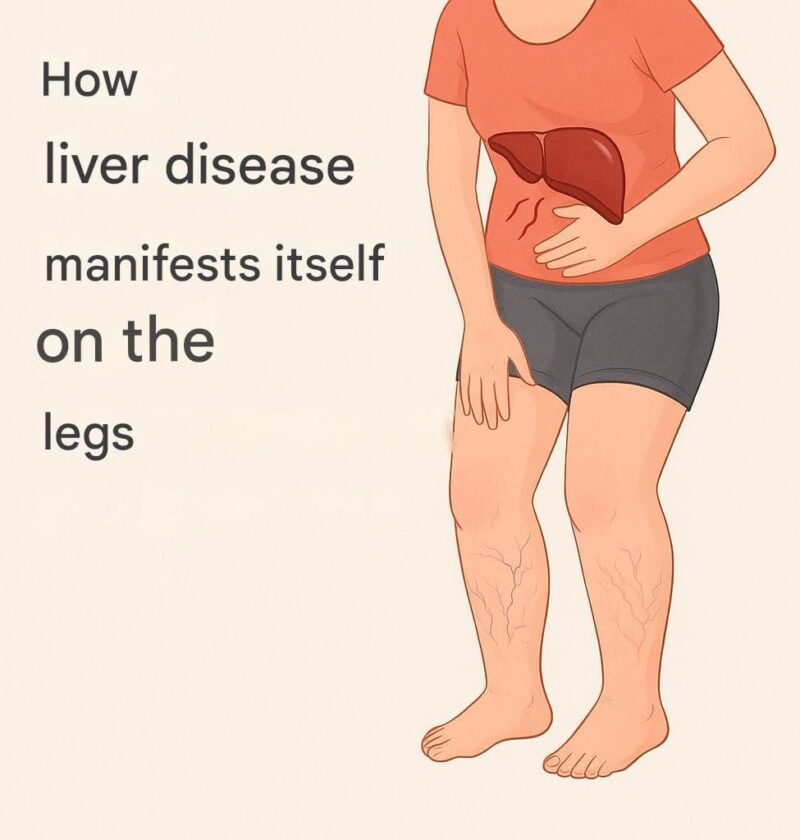
If you’re checking the headline “Your legs are screaming HELP! 5 warning signs from your liver,” it contains a grain of truth but is dramatic and potentially misleading. Leg symptoms alone cannot tell you that your liver is failing.
5 leg-related signs that can occur with significant liver disease
- Swollen ankles, feet or lower legs
Advanced cirrhosis can cause fluid to accumulate in the legs, called edema. This can happen because liver disease affects blood flow and reduces proteins such as albumin that help keep fluid inside blood vessels. (NIDDK) - Weakness or muscle wasting
Severe or advanced liver disease can be associated with loss of muscle mass and weakness. (nhs.uk) - Muscle cramps
Muscle cramps can occur in people with advanced liver disease, although cramps have many other common causes. (Remedy) - Itchy legs or widespread itching
Some liver and bile-duct diseases can cause significant itching. (NIDDK) - Changes associated with fluid buildup
Swollen legs may occur together with abdominal swelling (ascites) in advanced cirrhosis. This combination is much more concerning than ordinary leg swelling by itself. (NIDDK)
🚨 Don’t assume every swollen leg means liver disease
Leg swelling is also commonly caused by heart or kidney problems, venous disease, medications, prolonged sitting/standing, and other conditions.
More characteristic warning signs of significant liver disease include yellowing of the eyes/skin (jaundice), dark urine, pale stools, easy bruising or bleeding, persistent itching, abdominal swelling, unexplained weight loss, and confusion. (nhs.uk)
If you have new swelling in both legs, particularly with abdominal swelling or jaundice, it’s worth getting medically evaluated. If one leg suddenly becomes swollen, painful, red or warm, that needs prompt assessment because a blood clot is another possibility.
Bottom line: Your legs aren’t literally “screaming” that your liver is in trouble. But persistent leg swelling combined with other liver symptoms can be a sign of advanced liver disease and shouldn’t be ignored.