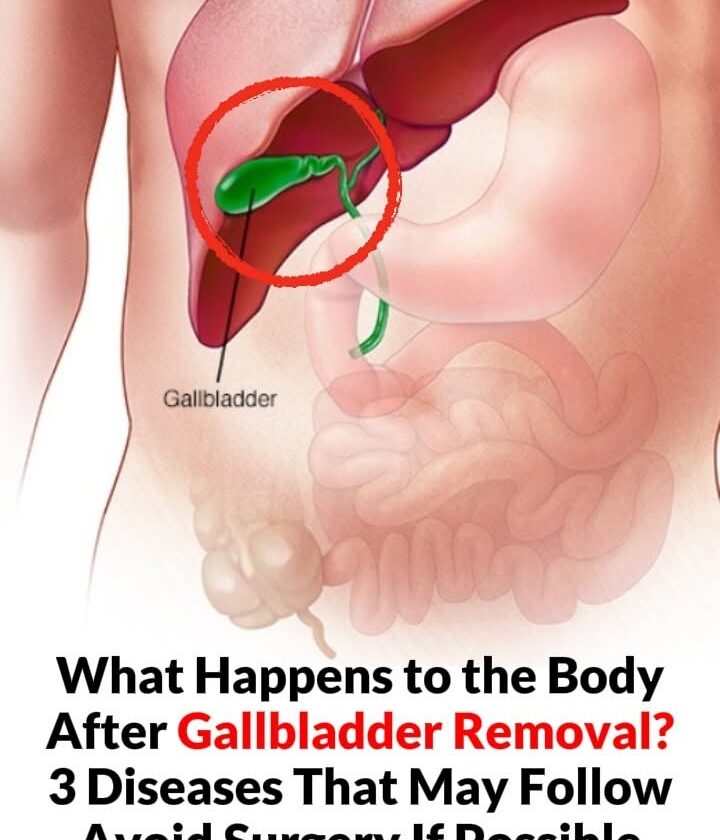
The headline “3 diseases that may follow gallbladder removal—avoid surgery if possible” is misleading. Gallbladder removal (cholecystectomy) is a common and generally safe operation, and people can live normally without a gallbladder.
What actually changes after surgery?
The gallbladder stores bile. After it’s removed, your liver continues producing bile, but the bile flows directly into the small intestine instead of being stored in the gallbladder.
Some people experience:
- Diarrhea or more frequent/softer stools — often temporary, although persistent diarrhea can occur in some people.
- Indigestion, bloating or abdominal discomfort — these symptoms are sometimes grouped under post-cholecystectomy syndrome.
- Difficulty tolerating fatty meals — some people notice that high-fat foods cause more digestive symptoms after surgery.
These are not three diseases that everyone develops, and there is no good evidence that gallbladder removal routinely causes serious diseases later in life.
Is it better to avoid surgery?
Not necessarily. If gallstones are causing repeated attacks or complications, removing the gallbladder is often the standard treatment. Untreated gallstones can cause gallbladder inflammation, bile-duct infection/blockage, liver problems, or pancreatitis, and serious complications can occur.
On the other hand, silent gallstones that cause no symptoms usually don’t require treatment. So the decision should depend on your symptoms, scans, complications and overall health—not on a blanket rule to avoid surgery.