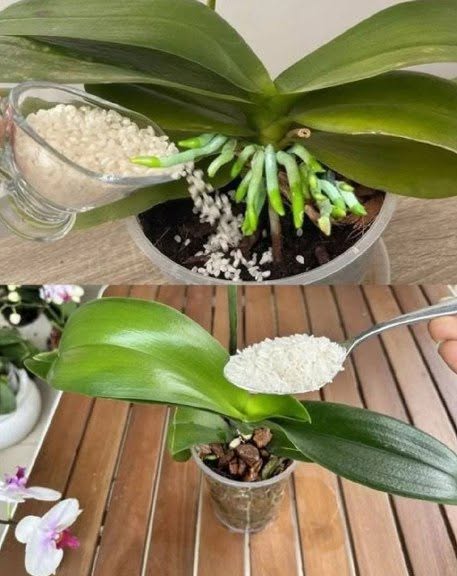
The “fertilization secret” behind lots of orchid blooms
The viral headline makes it sound as though there is a magic fertilizer or special dose that makes orchids “explode” with flowers for months. There isn’t. For common Phalaenopsis (moth orchids), successful reblooming is a combination of light, appropriate watering, temperature and light fertilization.
The biggest mistake: overfertilizing
More fertilizer doesn’t mean more flowers. University of Maryland Extension notes that overfeeding Phalaenopsis can produce lush leaves at the expense of flowers, while excess fertilizer can damage the roots.
A good general approach is:
- 🌱 Use a commercial orchid fertilizer according to its label.
- Dilute it rather than applying a concentrated dose; American Orchid Society guidance emphasizes that Phalaenopsis roots are sensitive to fertilizer salts.
- During active growth, light feeding every 2–4 waterings is a reasonable general schedule, depending on the fertilizer and growing conditions.
- Occasionally water with plain water to flush accumulated fertilizer salts.
🌞 But fertilizer isn’t the real “secret”
Light is crucial. Low light is one of the most common reasons Phalaenopsis orchids fail to rebloom. Bright, indirect light is generally recommended.
For many orchids, a period of cooler nighttime temperatures also helps trigger flowering. Iowa State Extension recommends a nighttime drop of roughly 10–15°F for several weeks for many species.
💧 And don’t drown the roots
Water thoroughly, allow excess water to drain, and don’t leave the orchid sitting in water. Constantly wet growing media can cause root problems.